Matrix Model simulations using Quantum Computing, Deep Learning, and Lattice Monte Carlo
Aug 9, 2021· ,,,,,,·
1 min read
Enrico Rinaldi
Xizhi Han
Mohammad Hassan
Yuan Feng
Franco Nori
Michael McGuigan
Masanori Hanada
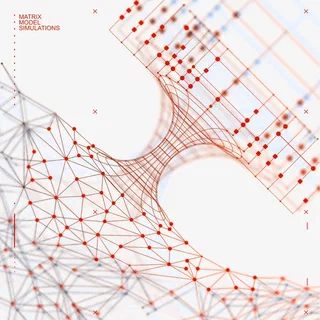 In this image, a pictorial representation of curved space time connects the two simulation methods. On the bottom, a deep learning method is represented by graphs of points (neural network), while the quantum circuit method on top is represented by lines, squares and circles (qubits and gates). The simulation methods merge with each side of the curved space time to represent the fact that gravity properties come out of the simulations. Image credit: E. Rinaldi and A. Silvestri
Abstract
Matrix quantum mechanics plays various important roles in theoretical physics, such as a holographic description of quantum black holes. Understanding quantum black holes and the role of entanglement in a holographic setup is of paramount importance for the development of better quantum algorithms (quantum error correction codes) and for the realization of a quantum theory of gravity. Quantum computing and deep learning offer us potentially useful approaches to study the dynamics of matrix quantum mechanics. In this paper we perform a systematic survey for quantum computing and deep learning approaches to matrix quantum mechanics, comparing them to Lattice Monte Carlo simulations. In particular, we test the performance of each method by calculating the low-energy spectrum
Type
Publication
PRX Quantum 3, 010324, 2022
News articles related to this publication:
